
Master of Desert Canyons and Cliffs
The endemic subspecies *Ovis canadensis weemsi* is found exclusively in the central and southern sierras of the Baja California Peninsula. Equipped with short desert coats and concave, rubbery hoof pads that grip like suction cups, they traverse near-vertical rock faces that deter predators such as mountain lions.
They derive vital moisture from consuming native desert cacti including barrel cactus (*biznaga*) and giant cardon, supplemented by tender desert legumes and torote leaves.
Majestic Horns and Autumn Mating Clashes
The monumental, spiral horns of mature rams never shed and can weigh up to 14 kg (30 lbs). During the autumn rut, rival males charge at speeds exceeding 30 km/h (20 mph), headbutting with thunderous impacts echoing across mountain canyons.
Their heavy skulls feature double-layered bone honeycomb structures that absorb tremendous shock, preventing concussions and serious injury.
Community Conservation and Wildlife Spotting
Through collaborative Wildlife Management Units (UMAs) and the Sierra de la Laguna Biosfera Reserve, wild sheep populations have stabilized remarkably. Sustainable eco-expeditions guided by local ranchers allow photographers and hikers to observe these magnificent animals at a respectful distance.
Galería de Desert Bighorn Sheep en Los Cabos y BCS
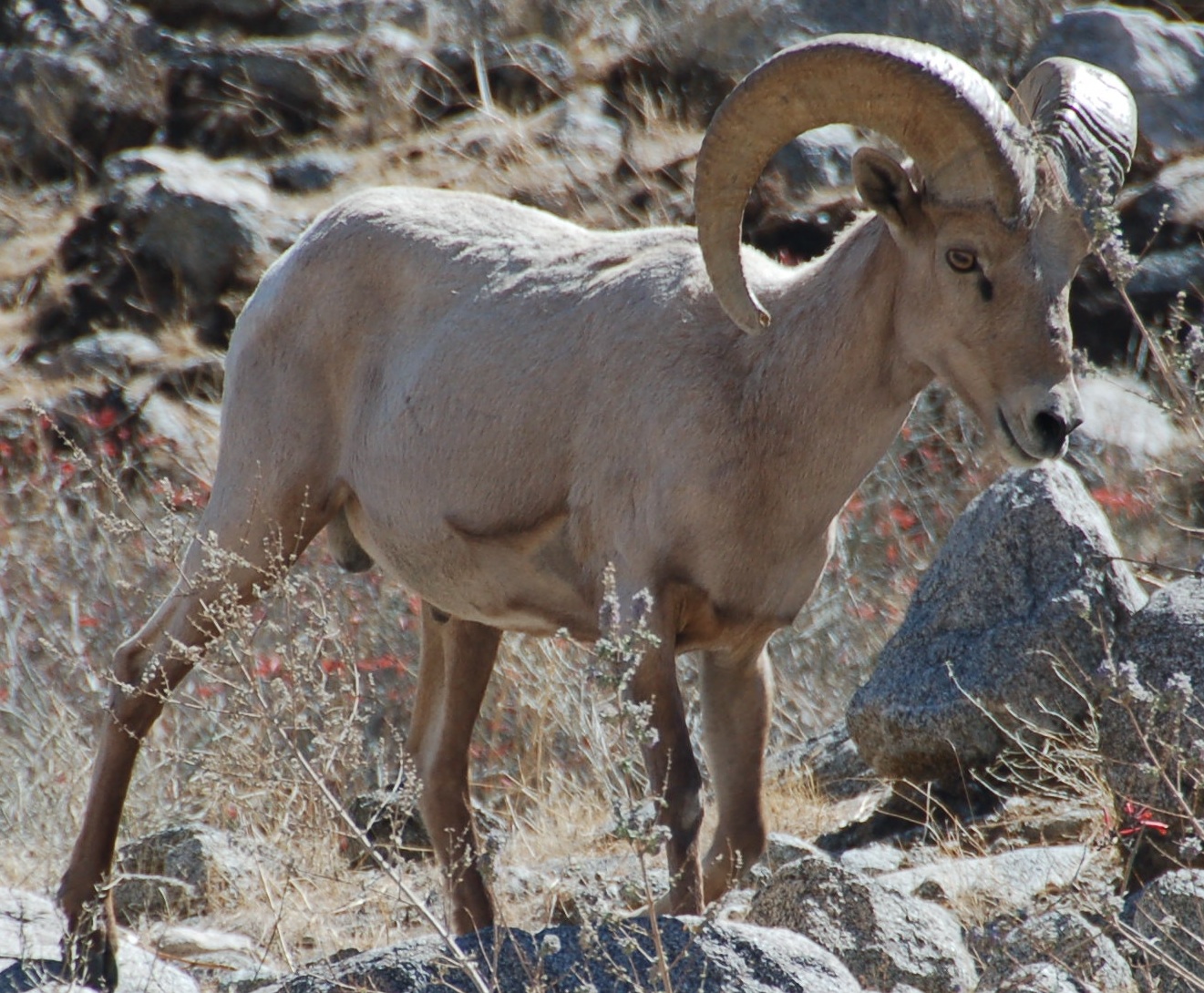 Hábitat Rocoso
Macho adulto de borrego cimarrón en los peñascos áridos de la sierra
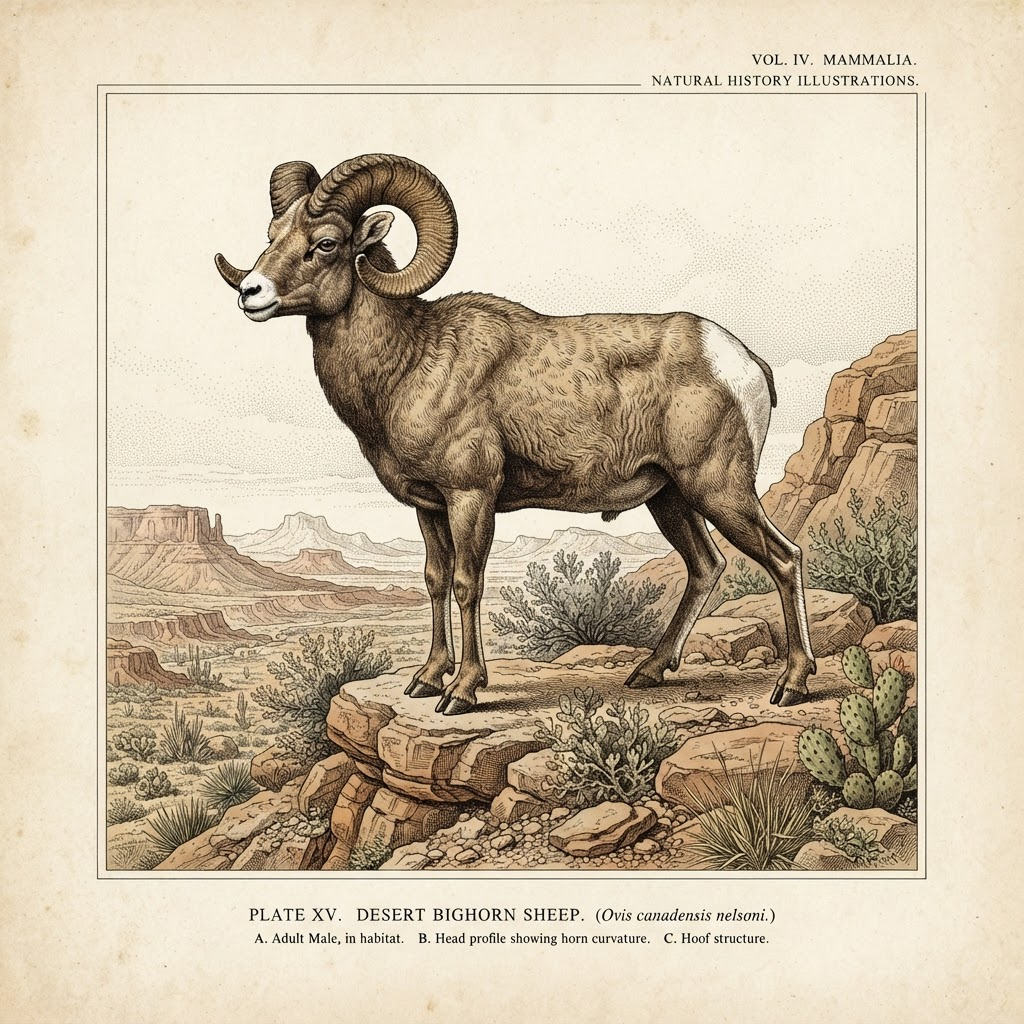 Lámina Zoológica
Ilustración científica histórica de Ovis canadensis nelsoni (Plate XV)
Fuentes Oficiales y Bibliografía Verificada
- Comisión Nacional de Áreas Naturales Protegidas (CONANP)
- Reserva de la Biosfera Sierra de La Laguna y Complejo La Giganta
- Instituto de Ecología (INECOL)
Ficha biológica verificada para la Enciclopedia de Baja California Sur. Si eres biólogo o prestador certificado y deseas aportar observaciones de campo, contacta a nuestro equipo científico.