Epic Migration Across the North Pacific
Every autumn, thousands of humpback whales embark on an epic 5,000-kilometer (3,000-mile) journey from their subarctic feeding grounds in Alaska, the Bering Sea, and Oregon to congregate in the warm, protected waters of Baja California Sur.
The confluence of the Pacific Ocean and the Sea of Cortez off Land's End provides calm seas, optimal depth, and warm temperatures essential for giving birth and nursing newborn calves during their first critical months of life.
Acrobatic Displays and Underwater Song
Humpback whales are by far the most acrobatic of all baleen whales. Weighing up to 40 metric tons, they regularly launch their entire bodies out of the water in spectacular breaches, slap their massive pectoral fins (up to 5 meters long), and lobtail against the surface.
Male humpbacks compose complex, evolving vocalizations known as whale songs. These eerie underwater melodies travel for miles across the underwater canyons of Cabo San Lucas and are believed to serve as mating displays and social coordination.
Maternal Bond and Calf Development
Calves are born measuring approximately 4.5 meters (15 feet) and weighing around one ton. Because they lack insulating blubber, mothers spend daylight hours close to the surface, frequently guiding their young with their pectoral fins and lifting them to breathe.
A nursing calf consumes up to 400 liters of nutrient-rich mother's milk daily, rapidly accumulating blubber to prepare for the strenuous northward migration in early spring.
Official Regulations for Responsible Whale Watching
Whale watching in Mexico is rigorously regulated by the Ministry of the Environment (SEMARNAT). All commercial vessels must display an authorized inspection flag and adhere to strict safety protocols.
Boats must maintain a minimum distance of 60 meters for standard sightings and 80 meters when mothers with calves are present, traveling at no-wake speeds to guarantee peaceful transit for these magnificent marine mammals.
Galería de Humpback Whale en Los Cabos y BCS
 Acrobacia
Salto acrobático completo (breaching) de ballena jorobada adulta saliendo del agua
 Inmersión
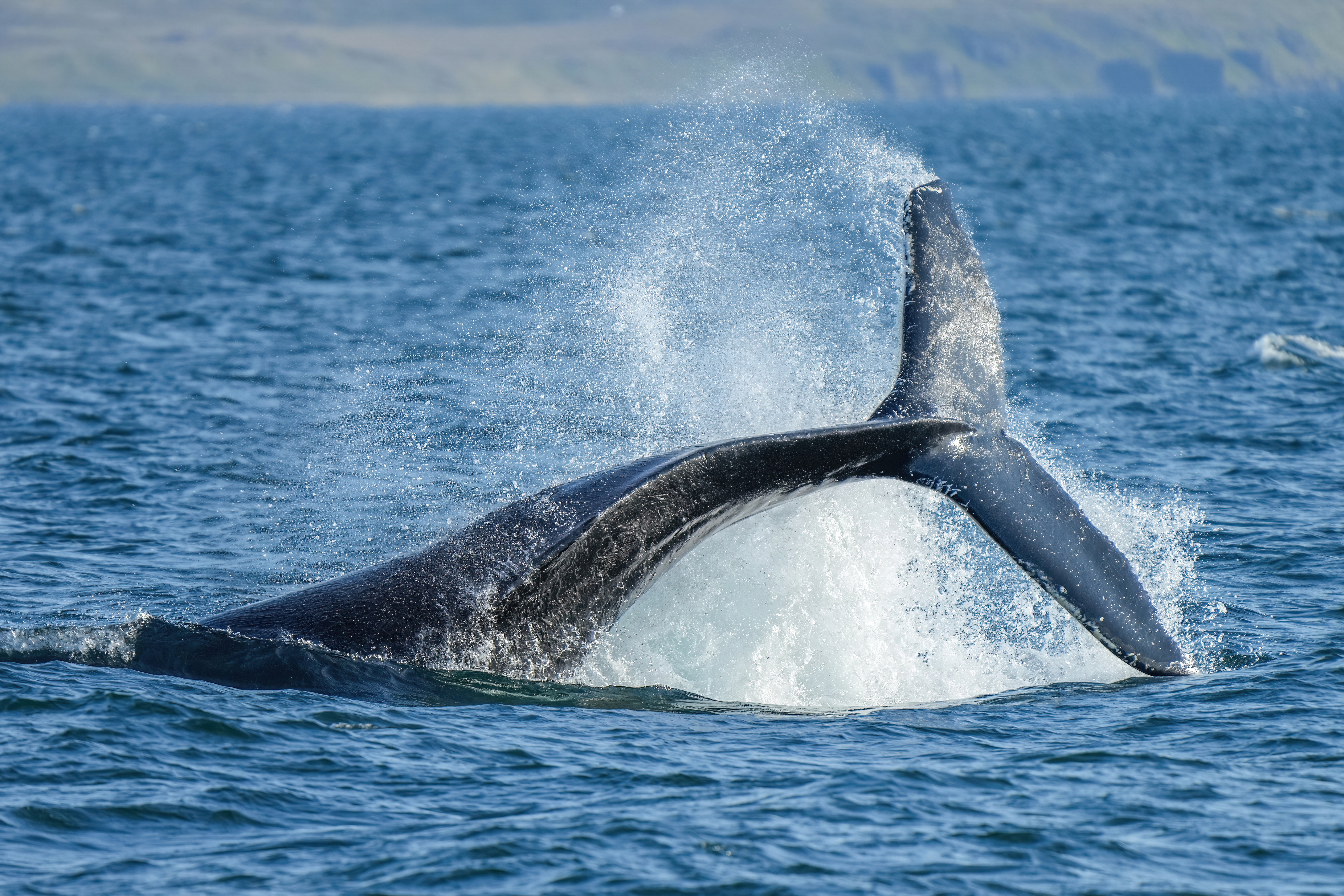
Aleta caudal expuesta (lobtailing) con marcas y cicatrices únicas de foto-identificación
 Nado Submarino
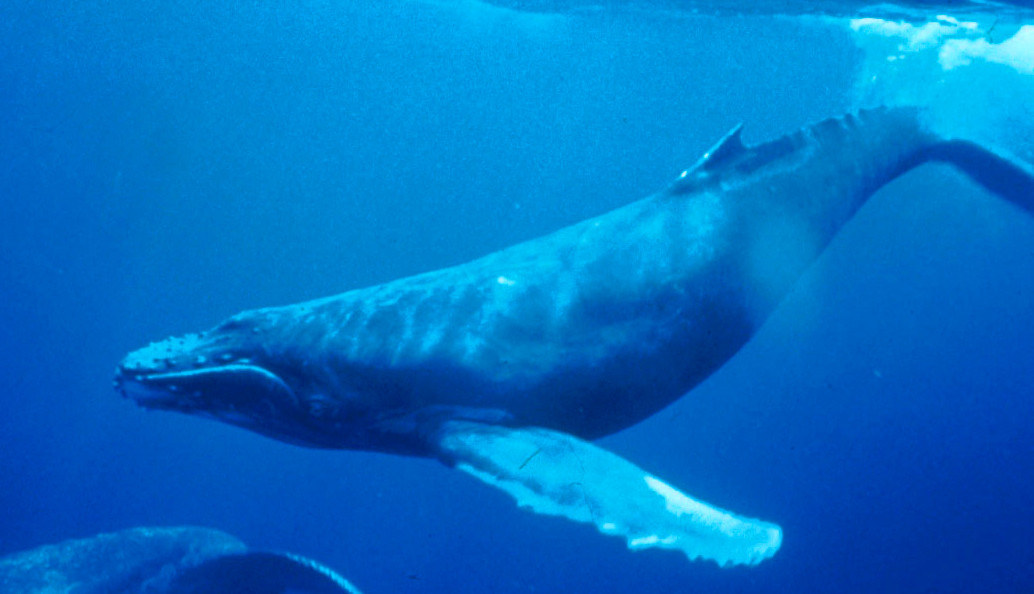
Ejemplar nadando en aguas cristalinas con sus aletas pectorales extendidas
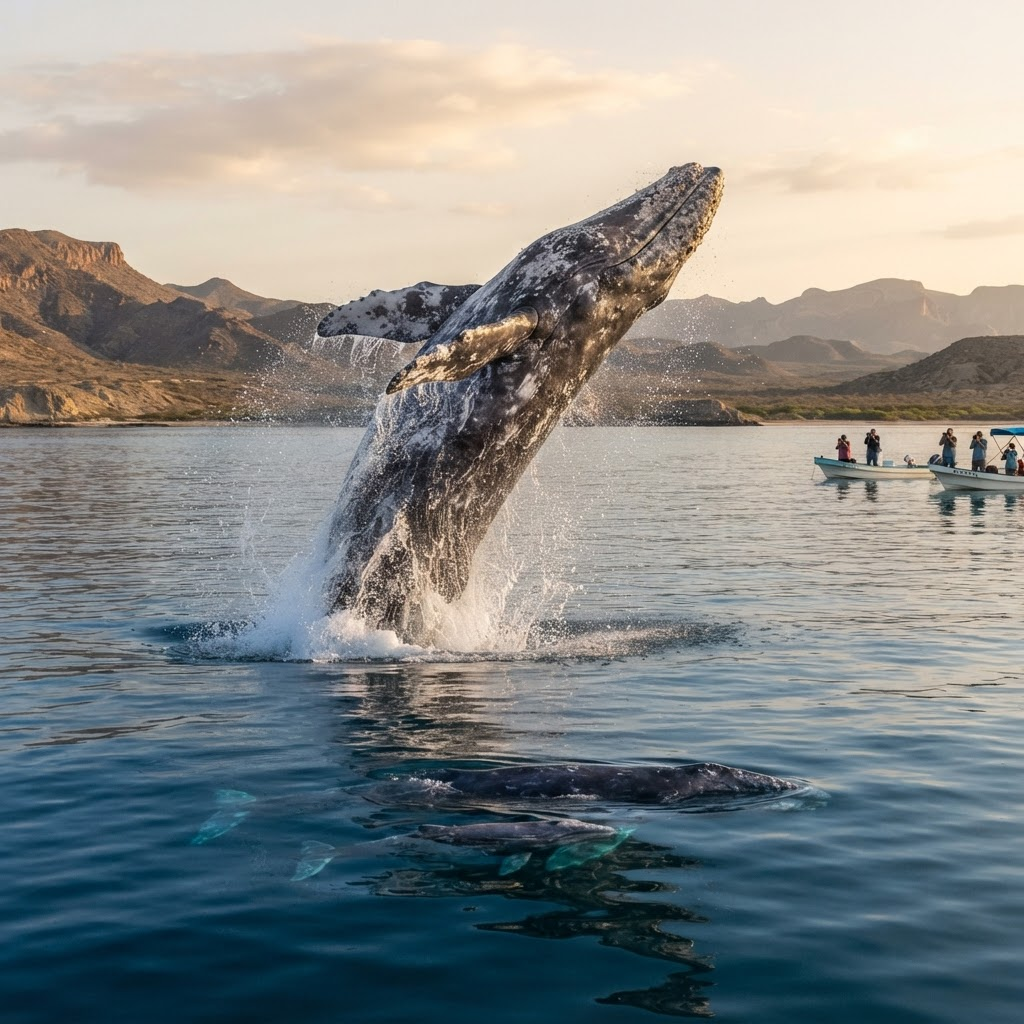 Avistamiento
 cercano en superficie durante la temporada de migración invernal
¿Deseas avistar a Humpback Whale en persona?
Explora el directorio de capitanes certificados, biólogos marinos y escuelas de buceo con autorización oficial en Cabo San Lucas, San José del Cabo y Cabo Pulmo.
Fuentes Oficiales y Bibliografía Verificada
- Comisión Nacional de Áreas Naturales Protegidas (CONANP)
- Red de Asistencia a Ballenas Enmalladas (RABEN Los Cabos)
- International Whaling Commission (IWC)
- Norma Oficial Mexicana NOM-131-SEMARNAT-2010
Ficha biológica verificada para la Enciclopedia de Baja California Sur. Si eres biólogo o prestador certificado y deseas aportar observaciones de campo, contacta a nuestro equipo científico.