
The Longest Mammal Migration on Earth
Gray whales undertake an extraordinary 10,000-kilometer (6,000-mile) voyage each year from the icy Chukchi and Bering Seas in the Arctic down to the subtropical coastal lagoons of Baja California Sur.
The world-renowned lagoons of Ojo de Liebre, San Ignacio, and Bahía Magdalena serve as UNESCO World Heritage coastal sanctuaries, where warm, high-salinity waters provide the buoyancy and thermal shelter vital for newborn survival.
Benthic Feeding Adaptations
Unlike pelagic baleen whales that feed in open waters, the gray whale is the only cetacean specialized in bottom (benthic) feeding: rolling onto its right side on sandy shoals, it scoops up seafloor sediment and filters thousands of amphipods through coarse baleen plates.
Lacking a dorsal fin, gray whales possess a distinctive dorsal ridge adorned with small knuckles. Their slate-gray skin hosts dense clusters of whale barnacles and cyamids (*whale lice*), creating their characteristic marbled, weathered appearance.
The Phenomenon of the «Friendly Whale»
Beginning in the 1970s, an extraordinary behavior emerged in the Baja lagoons: mothers began voluntarily nudging their newborn calves up to traditional small skiffs (*pangas*).
Showing zero fear, curious calves frequently raise their heads above the water surface to be gently touched and stroked by delighted onlookers, forging one of the most poignant encounters between wild animals and humans on Earth.
A Global Conservation Success Story
After being pushed to the brink of extinction during the 19th and early 20th centuries by commercial whaling, the Eastern North Pacific population has made a historic comeback. Today, over 14,000 gray whales thrive under the comprehensive protection of the Mexican government and local conservation stewards.
Galería de Gray Whale en Los Cabos y BCS
 Spyhopping
Madre asomándose verticalmente (espionaje) en las aguas tranquilas de la laguna
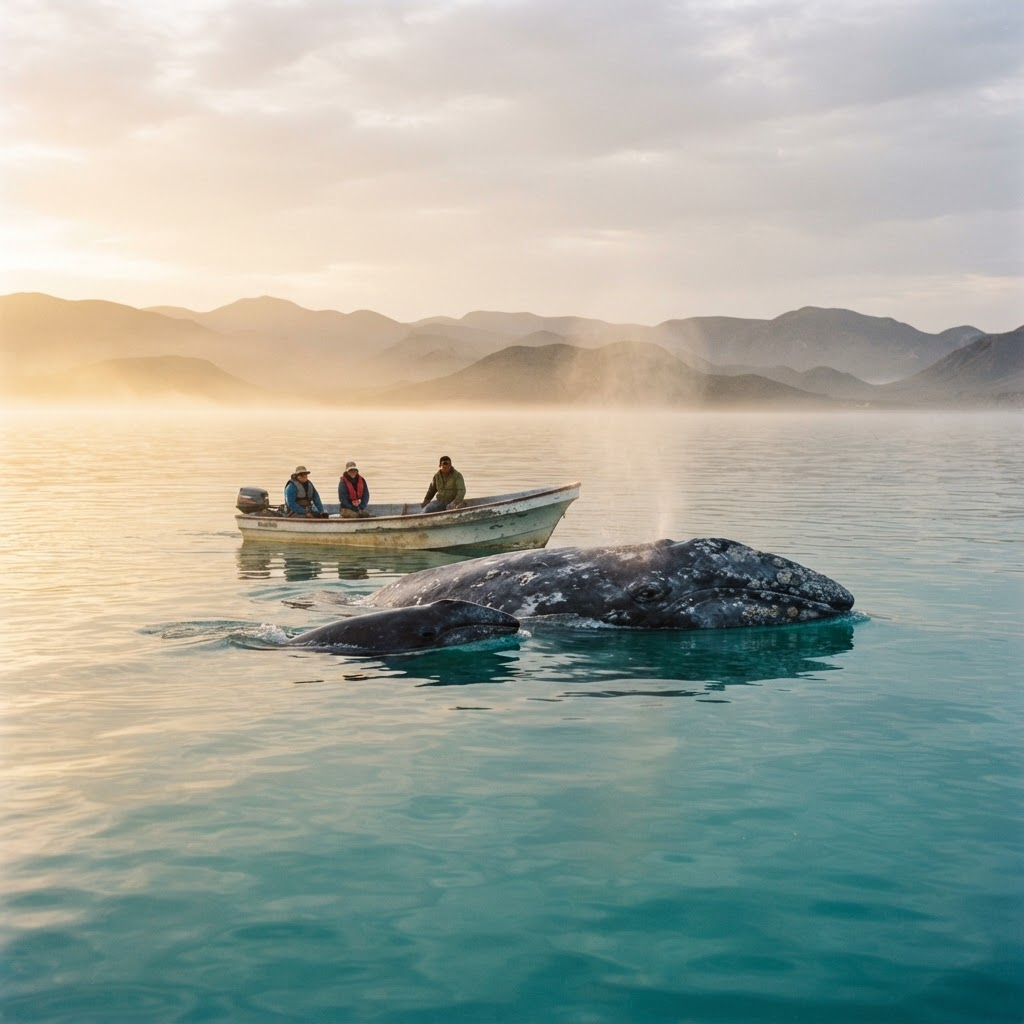 Avistamiento Ético
Madre y ballenato nadando junto a panga en un encuentro regulado y pacífico
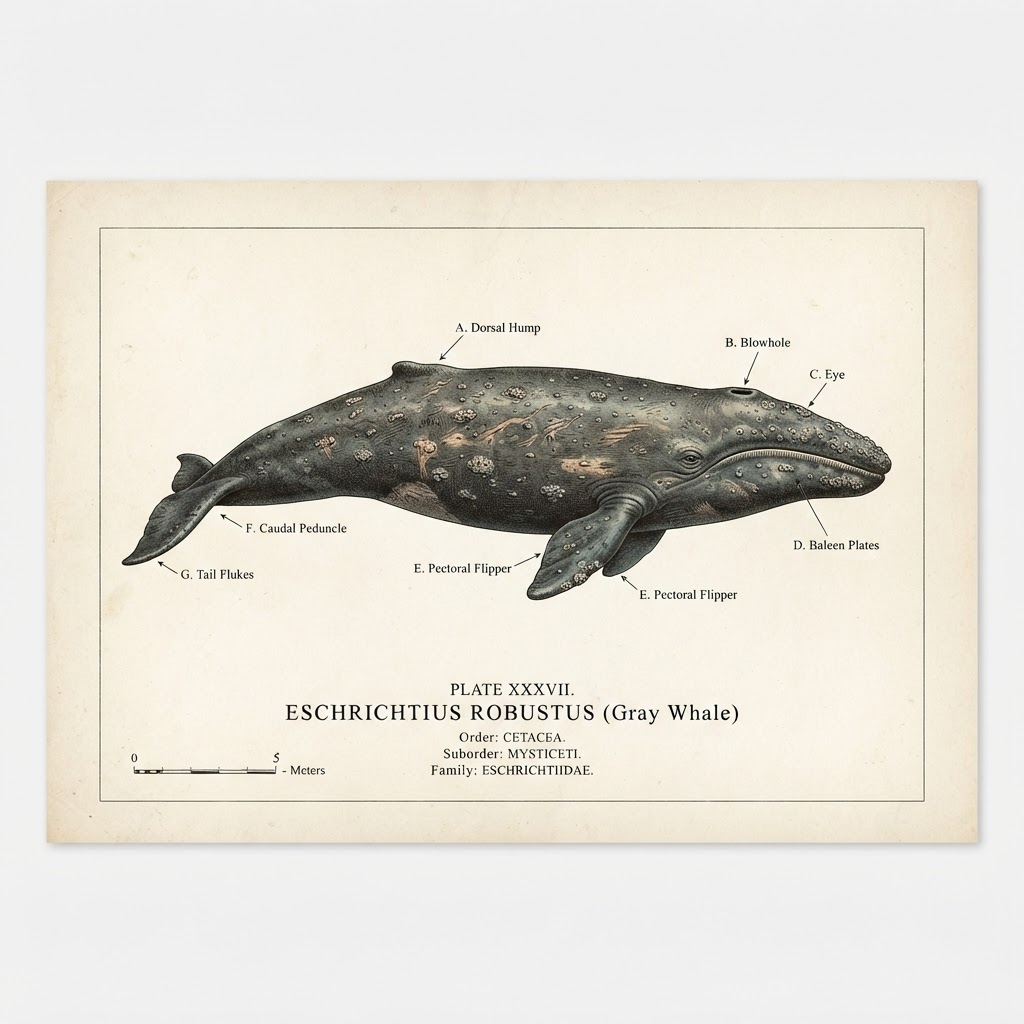 Lámina Científica
Lámina de historia natural de Eschrichtius robustus (Plate XXXVII)
¿Deseas avistar a Gray Whale en persona?
Explora el directorio de capitanes certificados, biólogos marinos y escuelas de buceo con autorización oficial en Cabo San Lucas, San José del Cabo y Cabo Pulmo.
Fuentes Oficiales y Bibliografía Verificada
- Comisión Nacional de Áreas Naturales Protegidas (CONANP)
- Reserva de la Biosfera El Vizcaíno (Patrimonio UNESCO)
- NOAA Fisheries — Marine Mammal Laboratory
Ficha biológica verificada para la Enciclopedia de Baja California Sur. Si eres biólogo o prestador certificado y deseas aportar observaciones de campo, contacta a nuestro equipo científico.